
SAAS FOR PRIVATE SCHOOLS AND ACADEMIES
The school teaches, the owner runs the franchise.
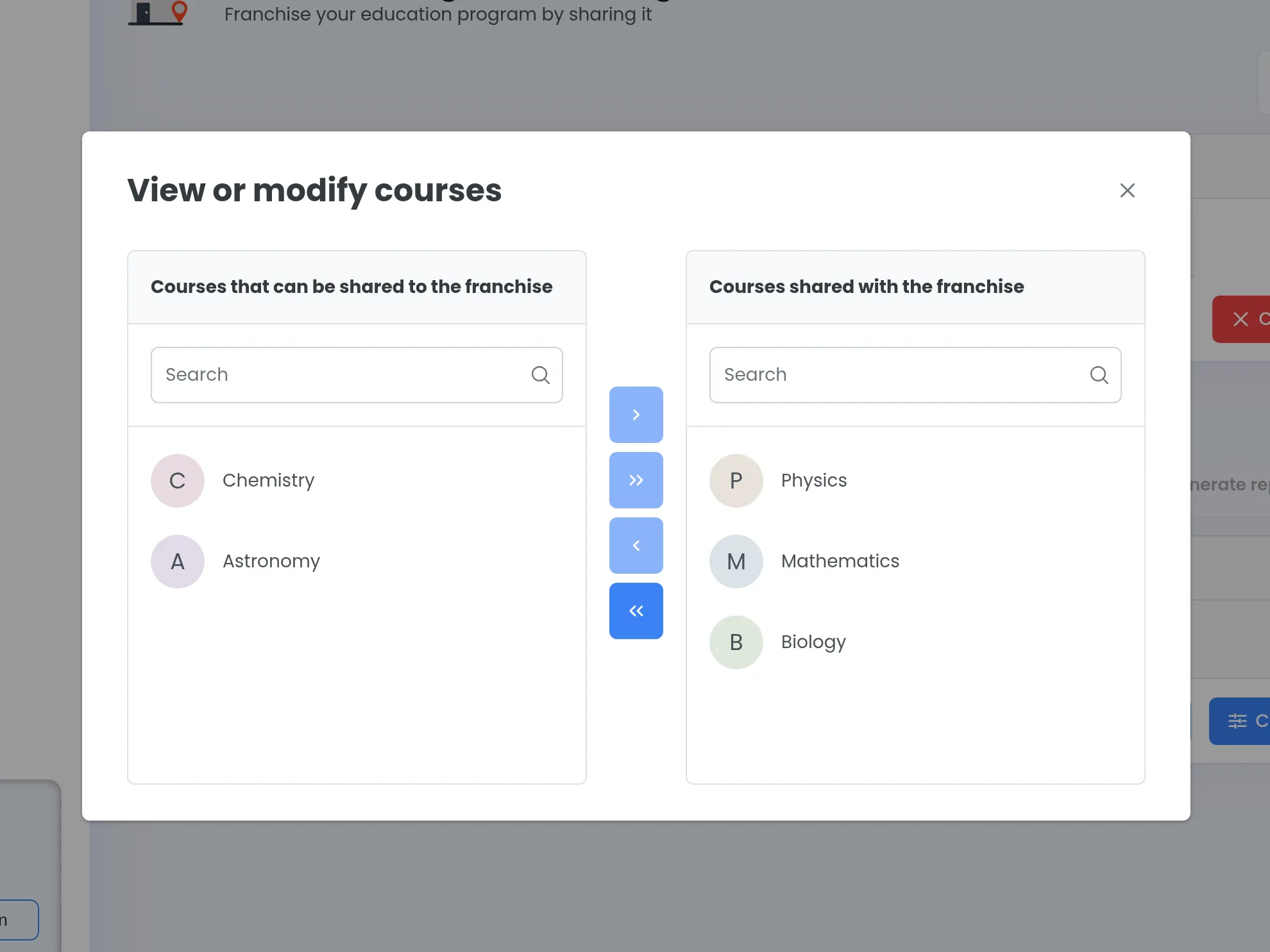
TeduQ is the platform private schools, academies and training centres run all of their operations on, from curriculum and enrolment through scheduling, attendance, grading, contracts, certificates and invoicing. We built the platform for Profectus. What sets this system apart from other education software is franchising of the education programme. The owner licenses it to other schools, and sees in a single report what is happening across the whole network.
 The client is Profectus d.o.o.
 Top down, from the franchise to the class hour.
Education franchises are large networks of organisations. Brainobrain, for one, is licensed out of a single head office in India to schools all over the world, and every change has to reach every school, while a report has to come back to the owner showing how the network runs and how much to invoice. Software that runs all of that did not exist.
TeduQ is built top down for that reason. A change to the franchise is published once and reaches every school holding it, from contracts and certificates through to programmes, class hours and levels. This is not a classic e-learning platform, though. Teaching is not delivered in it, it is run. Teachers create class hours, the school assembles programmes, and students and parents have their timetable, contracts and certificates in front of them.
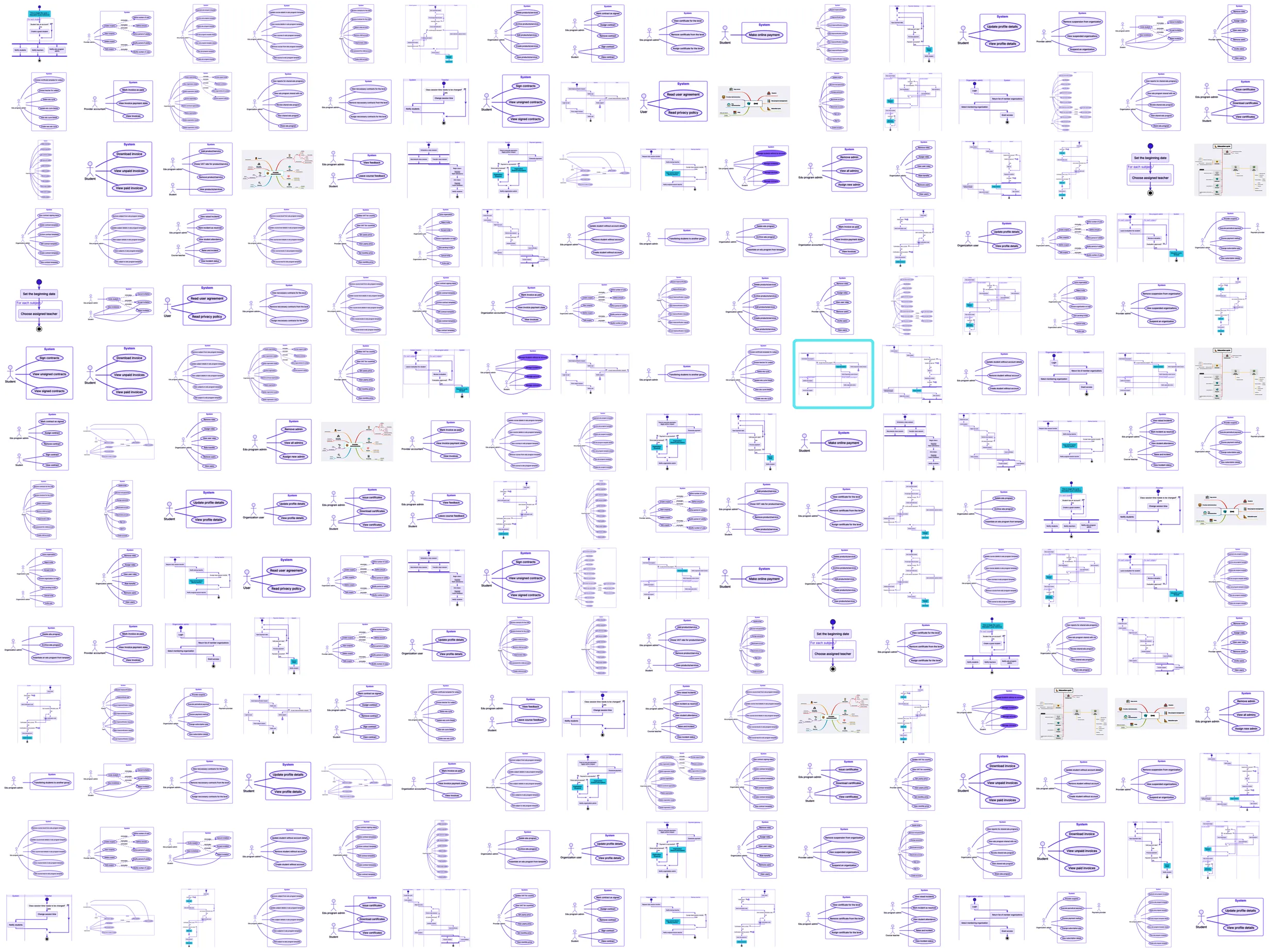
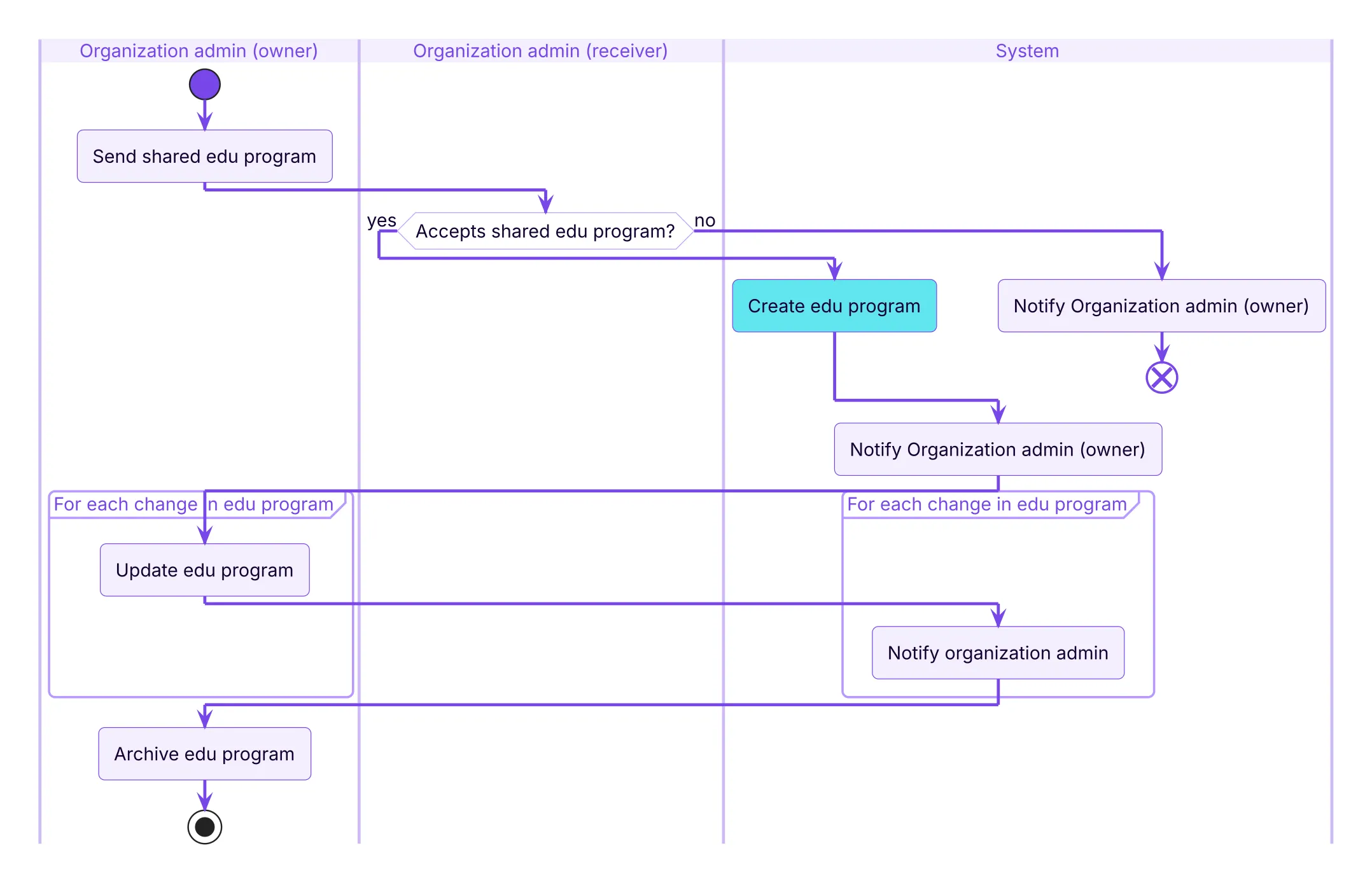
From a diagram to a module.
Everything drawn before the first line of code was written, then one drawing up close, then that same drawing today.
A programme is built, taught, and then measured.
01 / 04 The structure
02 / 04 The week and the hour
03 / 04 Attendance
★ / 04 The report
The screens come from a demonstration instance, and the report is a rendering of the file it returns. The structure runs on a language school network; the timetable, the class hour and the attendance are a course out of another programme in the same instance. The timetable and the attendance are assembled out of two applications, the student's and the teacher's, and the labels under the frames say which is which. Every screen is real; the figures are not the client network's, and every person on them is invented. The names are demo data and the faces are drawn avatars, not photographs of anyone.
Franchising is the tip, a whole school runs under it.
TeduQ has been live at teduq.com since June 2024. The master franchise for the Brainobrain programme in Bosnia and Herzegovina is held by the Institute for Youth Development KULT, which licenses it onward to centres city by city.1
How it stands in production.
It all lives on Azure, and test and production come up from the same Pulumi description, versioned alongside the application, so the difference between the two environments sits in one file. OpenTelemetry carries a trace of every request through the system, from the API call to the query on the database, so production is read the same way development is.
TECHNOLOGY
BEYOND US
 teduq.com live The product, live The site, the pricing, and the Network package that exists because of franchising.
  djeca.eu Brainobrain BiH The network KULT licenses The programme whose BiH master franchise KULT holds, with its centres listed city by city.
  mladi.org Sarajevo Institute for Youth Development KULT The organisation whose team we worked with, and the client using the platform.
 SOURCES Where everything on this page comes from
1 BRAINOBRAIN
“The owner of the master franchise of the Brainobrain programme for Bosnia and Herzegovina is the Institute for Youth Development KULT” is a sentence on the client's own site, at djeca.eu/dovedite-brainobrain-program-u-svoj-grad, translated from the Bosnian. The centres are listed city by city on the front page of the same site. As it stood in August 2026, and it is their account, not our measurement.
2 THE PEOPLE
Vesna Filipović and Adis Keserović work in the grant management department of the Institute for Youth Development KULT. The names, the roles and the photographs come from their publicly published team page on mladi.org.
Have a programme somebody else should be delivering?
We build systems where a network of partners still reads as one whole.
Built through our service Product Creation.