DIGITAL ART MEDIATION TWO MUSEUMS · GERMANY
Works of art, in their digital form.
In the programme „Vom Werk zum Display", Kunsthalle Mannheim and Kunstmuseum Stuttgart translate works from their collections into interactive digital episodes. The concept and the design are theirs, and the development was ours: we built eleven episodes and the meta navigation, twelve applications2 that run both as a public website and as touch kiosks in the galleries, in German and in English.
 Commissioned by Kunsthalle Mannheim and Kunstmuseum Stuttgart, with support from the German Federal Cultural Foundation3
 The design was ready. It had to become twelve products.
The two museums devised the programme together. Instead of one „digital collection" they planned 24 episodes: one application per work, built around what that work actually is. In the first phase the museums and a concept agency wrote a 135-page concept1 and one screenflow board per episode, explicitly „between a wireframe and pixel-perfect".
The second phase was to build all of it. Every episode in the concept ends with an explicit split of who delivers what: the museum supplies the images, the texts and the curatorial input, and the other side carries the design to the end, builds the application and produces the media in both languages. That development half was ours, for eleven episodes and the meta navigation the programme is entered through.
The hard part was not the volume but the variety: no two episodes are alike. A collage studio, a virtual lighting laboratory, a generative painting from 1973, a walk through a room lined with wax, a webshop that shatters. And all of it has to be one platform: bilingual, touch and non-touch, public web and a locked-down kiosk in the gallery.
The concept and the design are not ours, and that goes first: the museums devised the episodes, and the spatial installations in the galleries are studio zwo/elf's. On this project we were the developers, and our job was to turn the boards into products that work in front of an audience every day.
One entrance, then seven different episodes.
00 / 08 A way into the whole programme
01 / 08 Make your own Ardeleanu
02 / 08 A 1973 painting as a live system
03 / 08 A sculpture with no 3D model at all
04 / 08 A page that shatters
05 / 08 A quiz calibrated by everyone before you
06 / 08 A room you enter through a screen
★ / 08 Show the museum your hand
The screens come from the applications in production, captured through real flows. The wall of episodes is a capture of the live meta navigation on werk-zum-display.art.6 The counts the episodes quote, lighting states, hands in the cloud and gallery moderation, were checked against the source.5
In the galleries, in front of an audience.
The platform is live at werk-zum-display.art, and the same applications run as touch kiosks in the galleries of both museums. The exhibition „Vom Werk zum Display" opened on 20 June 20244, and since then a visitor has the original and its digital translation side by side in the same hall.
FROM THE OPENING8
ABOUT THE PROJECT, PUBLICLY
 kunstmuseum-stuttgart.de since 20 June 2024 Vom Werk zum Display The exhibition page: 22 episodes from both houses, the original and its digital translation side by side in the hall.
  kulturstiftung-des-bundes.de Fonds Digital The federal foundation’s project record The Fonds Digital programme: federal support for the digital transformation of cultural institutions.
  zwo-elf.de 6 August 2024 Vom Werk zum Display, from the design side The studio behind the spatial installations and the multimedia stations writes about the project. Our part of that story is the engineering behind the display.
 One workspace, twelve products, two audiences per build.
Every application is a public website and a museum kiosk at the same time: the routes are mirrored under /kiosk, a guard keeps the gallery screen locked down, and one tap returns the episode to its start for the next visitor. We built a backend only where the content asked for one: for the visitor gallery and for the quiz statistics.
 Angular ONE WORKSPACE
  .NET THE GALLERY AND QUIZ API
  MediaPipe ML IN THE BROWSER
 SOURCES Where everything on this page comes from
1 ROLE AND SCOPE
Development of eleven episodes and the meta navigation, the split of who delivers what, and the boards „between a wireframe and pixel-perfect": the client’s 135-page concept package, finalised on 7 March 2022 and archived in the repository with the code.
2 TWELVE APPLICATIONS
The delivery repository: eleven episodes plus the meta navigation.
3 PROGRAMME AND FUNDING
Fonds Digital: the public project record on kulturstiftung-des-bundes.de.
4 THE EXHIBITION
Opened 20 June 2024, 22 episodes: kunstmuseum-stuttgart.de, the exhibition page.
5 TECHNICAL DETAIL
96 lighting states, 154 hands across 112 works, gesture recognition in the browser, the antivirus scan and the moderation of the gallery: the source code, verified in an analysis of the repository.
6 THE SCREENS
The applications in production, captured through real flows; the wall of episodes is a capture of the live meta navigation on werk-zum-display.art.
7 THE BUILDING PHOTOGRAPHS
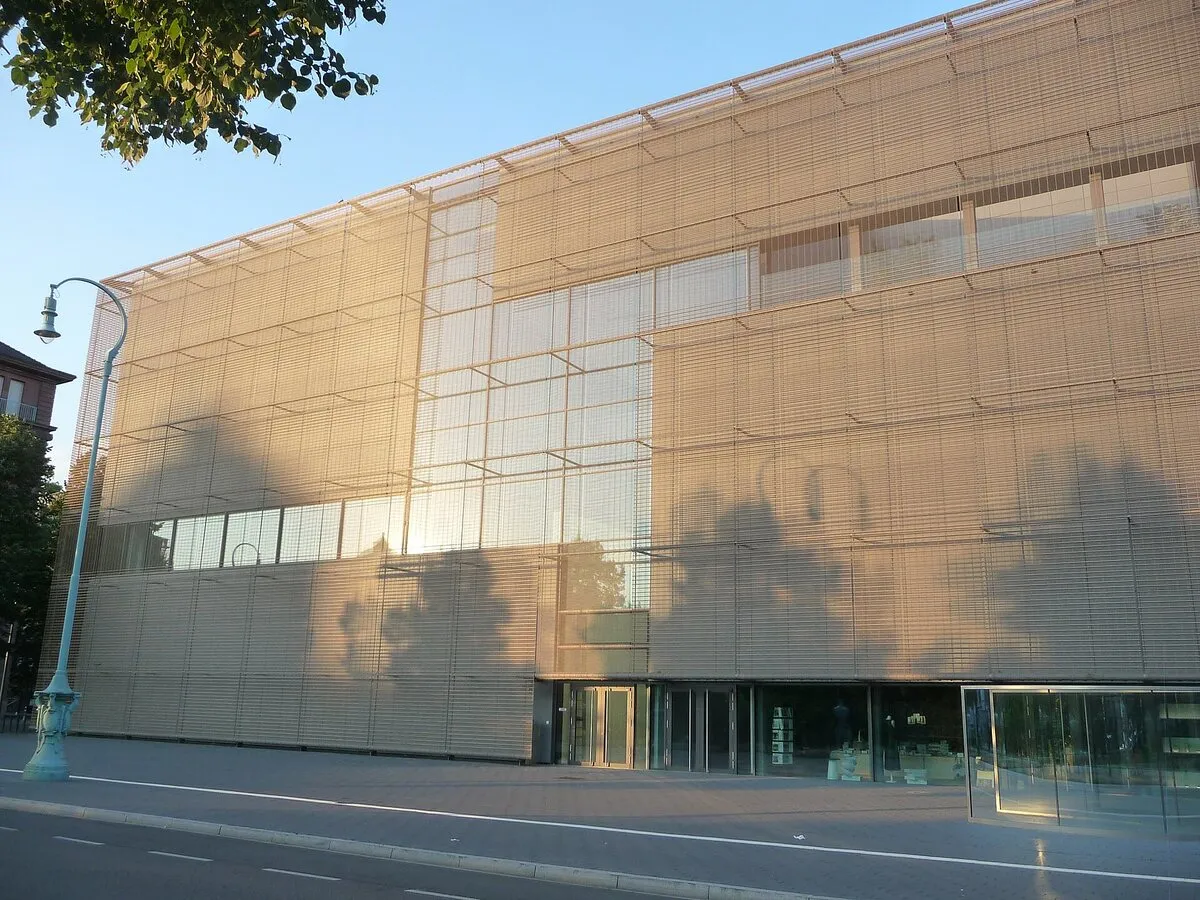
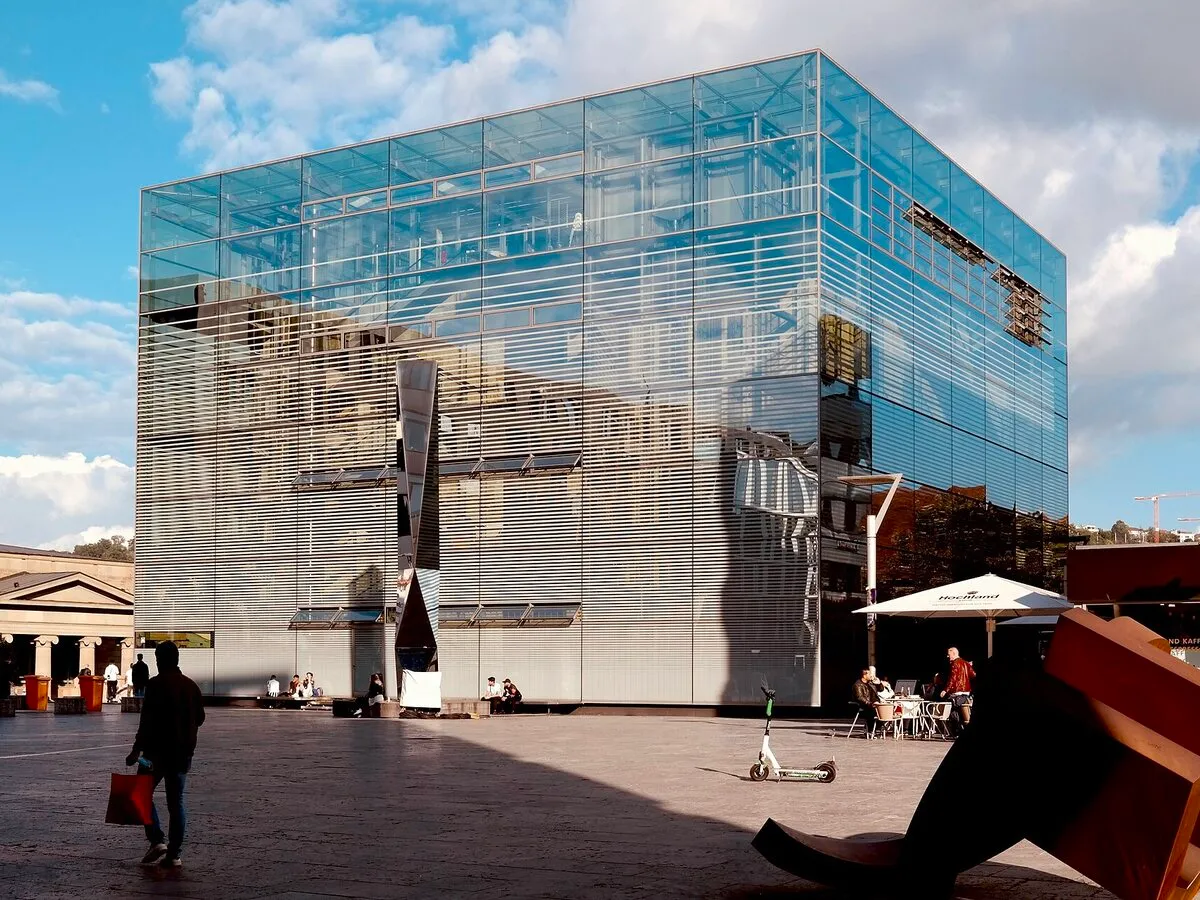
Wikimedia Commons: Kunsthalle Mannheim by Immanuel Giel and Kunstmuseum Stuttgart by Choinowski, both under CC BY-SA 4.0.
8 FROM THE OPENING
The photographs and the video from the opening: internal archive, 20 and 21 June 2024.
WHAT WE DO NOT CLAIM
The concept and the design are not ours. The museums devised the episodes with an agency in the first phase of the programme, and the spatial installations in the galleries are studio zwo/elf's. The capture of the meta navigation also shows tiles for episodes we did not develop.
Do you have a collection, an archive or a story that has to reach a screen?
We build digital experiences where the technology follows the logic of the content, episode by episode.
Built through our services Team Augmentation and AI Adoption.