Every year ends with the same temptation: to describe the work in adjectives. Busy. Productive. Challenging.
So instead of adjectives, we went to the one place that keeps an honest record of what a software team actually did, the commit history.
Here is what 2024 looked like from inside our repositories.
The Year in Numbers





2.7 million new lines of code. Our five most-used languages were C#, TypeScript, SQL, HTML and SCSS, a stack that reflects what we build most: business systems with a real database behind them and an interface people have to use every day.
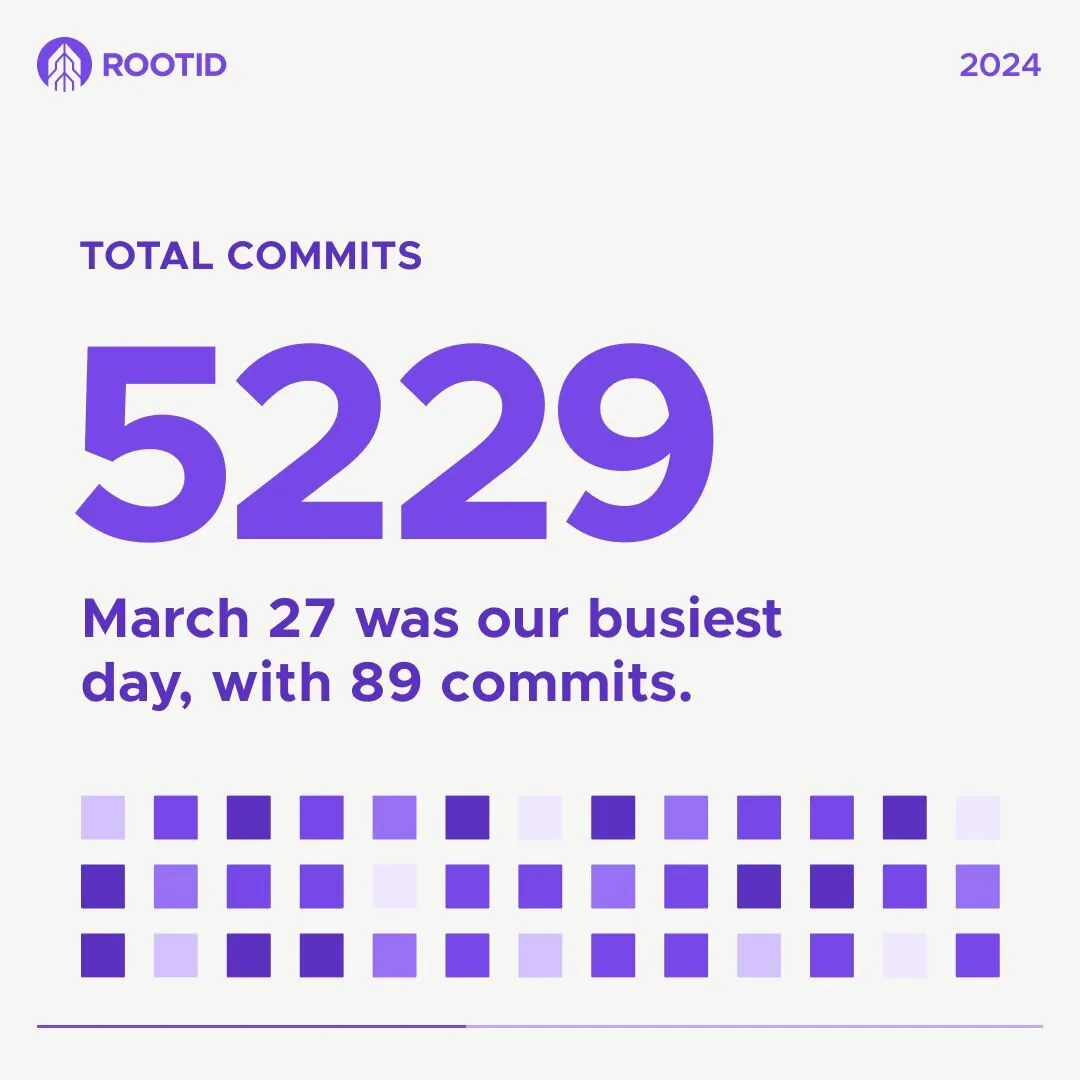
5,229 commits. Our busiest day was March 27, with 89 commits in a single day, which anyone who was on that release will remember without needing the graph.
209 shipped releases. Spread across the year, that is roughly four releases a week. Not a headline number on its own, but it is the one that says the most about how we work: small batches, shipped often, with a short distance between a decision and the moment a user feels it.
What Our Commit Messages Admit
We prefix commits with emoji, which turns a year of messages into an accidental audit. The top three: 921 styling changes, 887 refactors, and 726 new features.
That ratio is the most useful thing in this whole recap. For every feature we created, we spent about two and a half commits improving something that already existed: polishing an interface, untangling a module, paying down a decision that had stopped earning its keep. Roughly half of the year went into work no changelog would ever mention.
The Number We Are Quietly Proud Of
87 commits were critical hotfixes. Out of 5,229, that is 1.7% of the year spent fixing something urgent in production.
We are not going to pretend that number should be zero. It never is, and a team that reports zero is usually just not counting. But at four releases a week, it is the difference between shipping frequently and shipping recklessly, and it is the number we will be watching again next year.
What We Take Into 2025
The numbers describe a team that spends most of its time on maintainability rather than novelty, and that treats a release as a routine event rather than a milestone. That is a deliberate choice, and it is the same one we make for clients: systems are cheap to launch and expensive to live with, so the work that matters is usually the work that never makes the changelog.
Let’s Make Your 2025 Numbers Look Like This
Tell us what you are building, and we will tell you honestly what it takes to keep it running.